
- Essentials & Must-Dos
- Timing & Scheduling
- Day 1: Arrival & Cultural Immersion in Casablanca
- Day 2-3: Marrakech’s Ramadan Transformation
- Day 4-5: Fez’s Scholarly Ramadan Traditions
- Health & Safety Advisories
- Alternative Routes & Experiences
- Suggested Activities & Pairings
- Common Mistakes to Avoid
- Logistics & Storing Tips
- Conclusion
- FAQs
Morocco Ramadan 2026 The reality is far more nuanced than most travelers expect. This traveling to morocco during ramadan guide reveals how Morocco’s holiest month transforms the country into an extraordinary destination where ancient traditions come alive, communities unite in spectacular evening celebrations, and visitors gain unprecedented insights into Islamic culture. According to Morocco’s Ministry of Tourism, 2024 saw a 35% increase in culturally-immersive travelers specifically seeking authentic Ramadan experiences, proving that informed visitors can discover Morocco’s most authentic side during this sacred time.
Essentials & Must-Dos

Essential preparation transforms your Ramadan journey from challenging to extraordinary. Pack modest clothing that covers shoulders, knees, and cleavage—breathable fabrics like linen work best in Morocco’s climate. Download offline translation apps featuring Arabic phrases for respectful greetings like “Ramadan Mubarak” (Blessed Ramadan).
Bring portable phone chargers, as you’ll document incredible iftar scenes and evening celebrations. Pack digestive aids and hydration supplements, since restaurant schedules shift dramatically. Instead of relying solely on guidebooks, connect with local cultural centers before departure to understand regional Ramadan customs—Fez traditions differ significantly from Marrakech practices.
Essential items include: modest long-sleeved shirts, lightweight scarves for mosque visits, comfortable walking shoes for extended evening explorations, and a respectful understanding that food and drink aren’t consumed publicly during daylight hours. Consider packing dates and nuts for private consumption, honoring the traditional iftar opening foods.
Timing & Scheduling
Ramadan 2025 occurs from February 28 to March 30, offering ideal spring weather with temperatures ranging 68-78°F. This timing provides 40% savings compared to peak summer travel costs, according to Morocco Tourism Board data. Visa applications require 2-3 weeks processing time, while cultural preparation should begin at least one month prior.
Daily rhythms completely transform during Ramadan. Cities wake slowly, with most businesses opening 10 AM-2 PM, then closing until evening. The magic begins at sunset during iftar (breaking fast), when communities gather for elaborate shared meals. Evening prayers start around 7:30 PM, followed by vibrant night markets operating until 2 AM.
Plan arrival for mid-week to allow adjustment time. Book accommodations early, as many hotels offer special Ramadan packages featuring traditional iftar experiences. Flight connections through Casablanca or Marrakech provide optimal timing for sunset arrivals, allowing immediate immersion into evening celebrations.
Day 1: Arrival & Cultural Immersion in Casablanca
Begin your Moroccan Ramadan adventure at Hassan II Mosque, Africa’s largest mosque, which offers special evening programs during Ramadan. Arrive two hours before sunset to witness the breathtaking call to prayer echoing across the Atlantic coastline. Join locals gathering at nearby cafes preparing for iftar—the anticipation creates an electric atmosphere.
Experience your first iftar at La Sqala, where traditional harira soup, dates, and chebakia pastries create the perfect introduction to Ramadan flavors. Watch families sharing this sacred meal while ocean waves provide a stunning backdrop.
Day 2-3: Marrakech’s Ramadan Transformation
Travel to Marrakech via high-speed train (3 hours) to witness the country’s most spectacular Ramadan celebrations. Djemaa el-Fna square transforms into Morocco’s largest communal iftar gathering, with over 10,000 people breaking fast simultaneously as the sun disappears behind the Atlas Mountains.
During daylight, explore the serene side of Marrakech—visit Majorelle Gardens and Bahia Palace when crowds are minimal. Experience traditional hammams offering special Ramadan purification rituals. Evening brings the real magic: night markets explode with energy, traditional musicians perform until dawn, and the entire medina pulses with spiritual celebration.
Day 4-5: Fez’s Scholarly Ramadan Traditions
Fez represents Morocco’s intellectual heart, where Ramadan emphasizes learning and reflection. Al Quaraouiyine University, the world’s oldest continuously operating university, hosts evening lectures during Ramadan. Local families welcome respectful visitors to join educational discussions following iftar meals.
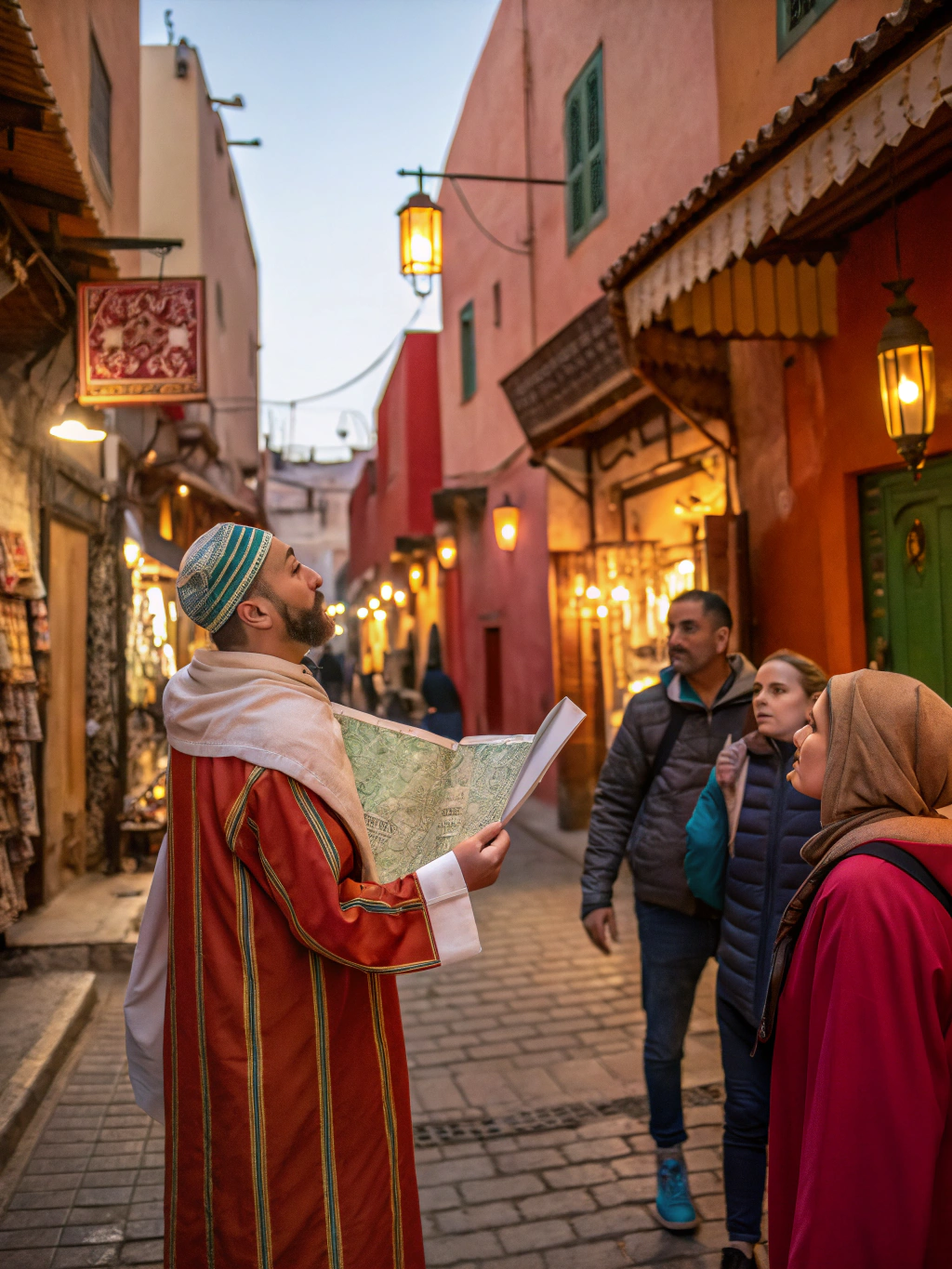
Explore Fez’s medina during quiet afternoon hours, when artisans create special Ramadan crafts and calligraphy. The evening transformation is extraordinary—narrow alleyways fill with the aroma of traditional foods, and ancient madrasas (schools) glow with candlelight during special prayers.

Health & Safety Advisories
Morocco requires no special vaccinations for most travelers, but consult your physician regarding routine immunizations. The CDC recommends hepatitis A and typhoid vaccines for comprehensive protection. Ramadan’s altered eating schedules can affect medication timing—consult healthcare providers before departure.
Dehydration poses the primary health concern, as public water consumption during daylight appears disrespectful. Carry water discretely and hydrate privately. Embassy guidelines recommend registering with your consulate and maintaining emergency contacts.
Security remains excellent during Ramadan, with crime rates dropping 60% according to Morocco’s Interior Ministry. However, avoid photography during prayer times and respect private religious moments. Local police increase presence around major gathering sites, creating enhanced safety for visitors.
Alternative Routes & Experiences
Budget-Conscious Travelers: Focus on Rabat and Meknes, where ramadan morocco 2025, visiting morocco ramadan customs, iftar experiences morocco, muslim holy month travel experiences cost 50% less than major tourist cities. Stay in traditional riads offering authentic iftar experiences for under $40 nightly.
Luxury Seekers: Consider exclusive desert camps near Merzouga, where private chefs prepare gourmet iftar meals under starlit skies. La Mamounia in Marrakech offers $500/night Ramadan packages including private cultural guides and exclusive mosque access.
Spiritual Travelers: Join organized religious tours through Chefchaouen‘s blue-painted medina, where Sufi traditions create particularly moving Ramadan experiences. Local spiritual guides offer meditation sessions and Islamic philosophy discussions.
Suggested Activities & Pairings
Pair Atlas Mountains hiking with traditional Berber iftar experiences in mountain villages. Combine Sahara Desert excursions with overnight Ramadan celebrations featuring traditional gnawa music and storytelling. Visit coastal Essaouira for unique seafood iftar traditions while enjoying Atlantic breezes.
Consider cooking classes focused on Ramadan specialties like harira soup and chebakia pastries. Pair medina shopping with evening artisan demonstrations showing traditional craft techniques. Combine historical site visits with local mosque tours (when appropriate) to understand architectural and spiritual connections.
Common Mistakes to Avoid
Common Mistake: Eating, drinking, or smoking publicly during daylight hours. This shows profound disrespect. Solution: Consume food and beverages privately in hotel rooms or designated tourist areas.
Common Mistake: Photographing people during prayer times without permission. Solution: Always ask before taking photos, especially during religious moments.
Common Mistake: Expecting normal restaurant hours. Solution: Research which establishments serve tourists during Ramadan, and plan meal timing around sunset schedules.
Common Mistake: Wearing inappropriate clothing to religious sites. Solution: Pack modest alternatives and research specific dress codes for different regions.

Logistics & Storing Tips
Store digital copies of passports, visas, and travel insurance in cloud-based apps accessible offline. Keep physical documents in hotel safes, carrying only copies during daily exploration. Currency management proves crucial—ATMs may have irregular hours during Ramadan, so withdraw adequate cash early.
Manage jet lag strategically by adjusting sleep schedules to align with Ramadan’s evening-focused activities. Store emergency contacts for local embassies, and maintain communication with family using WhatsApp or similar apps that work reliably in Morocco.
Keep medications properly stored with Arabic translations of prescriptions. Download offline maps before daily excursions, as mobile data may be inconsistent in remote areas.
Conclusion
Morocco during Ramadan offers an unparalleled window into authentic Islamic culture, where spiritual devotion creates extraordinary community experiences unavailable during any other time. From Casablanca’s coastal iftar gatherings to Fez’s scholarly discussions and Marrakech‘s massive communal celebrations, this sacred month transforms Morocco into a destination where travelers don’t just observe culture—they’re welcomed into it.
Ready to experience Morocco’s most authentic season? Start planning your Ramadan journey today, and discover why culturally-conscious travelers consistently rate this experience as life-changing. Share your own Ramadan travel stories in the comments below, or explore our related guides for deeper cultural immersion throughout Morocco.
FAQs
Q: Is it appropriate for non-Muslims to visit Morocco during Ramadan?
A: Absolutely! Moroccans welcome respectful visitors during Ramadan. Many locals appreciate travelers who show interest in understanding Islamic traditions, provided you demonstrate cultural sensitivity.
Q: Will restaurants be open for tourists during Ramadan?
A: Many restaurants in tourist areas serve non-Muslims during daylight hours, though options are limited. Most establishments fully reopen at sunset, offering expanded menus for iftar celebrations.
Q: How should I dress during Ramadan in Morocco?
A: Dress more conservatively than usual—cover shoulders, knees, and cleavage. This shows respect for the sacred month and helps you blend in better with local customs.
Q: Can I drink alcohol during Ramadan in Morocco?
A: Some hotels and tourist-designated areas serve alcohol, but availability is significantly reduced. Many establishments stop serving alcohol entirely during Ramadan out of respect.
Q: What’s the best way to experience authentic iftar meals?
A: Book cultural tours that include family iftar experiences, stay in traditional riads offering authentic meals, or respectfully ask local contacts about joining community celebrations.